
Sightful Invest
  • Business
  • Investing
  • Politics
  • Stock
Top Posts
Key House committee advances nationwide voter ID bill,...
FDA refuses to review Moderna’s mRNA flu vaccine...
Trump, Netanyahu to meet at White House in...
Vance warns Iran that ‘another option on the...
Meta, Google face massive liability as ‘addicted kids’...
Trump to host ‘Clean Beautiful Coal’ event, calls...
Russia agrees to abide by expired New START...
Israel joins Board of Peace ahead of Netanyahu-Trump...
Bondi confirms DOJ has received criminal referral alleging...
Schumer, Dems choose partial shutdown as negotiations hit...
  • Business
  • Investing
  • Politics
  • Stock

Sightful Invest

Business

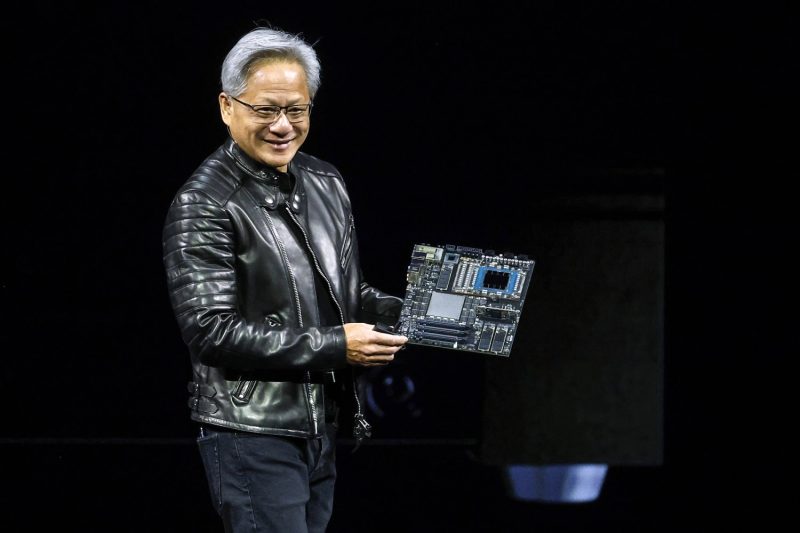
Nvidia’s CEO did a Q&A with analysts. What he said and what Wall Street thinks about it.

by admin March 26, 2025
March 26, 2025
Nvidia’s CEO did a Q&A with analysts. What he said and what Wall Street thinks about it.

Investors have closely watched Nvidia’s week-long GPU Technology Conference (GTC) for news and updates from the dominant maker of chips that power artificial intelligence applications.

The event comes at a pivotal time for Nvidia shares. After two years of monster gains, the stock is down 15% over the past month and 22% below the January all-time high.

As part of the event, CEO Jensen Huang took questions from analysts on topics ranging from demand for its advanced Blackwell chips to the impact of Trump administration tariffs. Here’s a breakdown of how Huang responded — and what analysts homed in on — during some of the most important questions:

Huang said he “underrepresented” demand in a slide that showed 3.6 million in estimated Blackwell shipments to the top four cloud service providers this year. While Huang acknowledged speculation regarding shrinking demand, he said the amount of computation needed for AI has “exploded” and that the four biggest cloud service clients remain “fully invested.”

Morgan Stanley analyst Joseph Moore noted that Huang’s commentary on Blackwell demand in data centers was the first-ever such disclosure.

“It was clear that the reason the company made the decision to give that data was to refocus the narrative on the strength of the demand profile, as they continue to field questions related to Open AI related spending shifting from 1 of the 4 to another of the 4, or the pressure of ASICs, which come from these 4 customers,” Moore wrote to clients, referring to application-specific integrated circuits.

Piper Sandler analyst Harsh Kumar said the slide was “only scratching the surface” on demand. Beyond the four largest customers, he said others are also likely “all in line looking to get their hands on as much compute as their budgets allow.”

Another takeaway for Moore was the growth in physical AI, which refers to the use of the technology to power machines’ actions in the real world as opposed to within software.

At previous GTCs, Moore said physical AI “felt a little bit like speculative fiction.” But this year, “we are now hearing developers wrestling with tangible problems in the physical realm.”

Truist analyst William Stein, meanwhile, described physical AI as something that’s “starting to materialize.” The next wave for physical AI centers around robotics, he said, and presents a potential $50 trillion market for Nvidia.

Stein highliughted Jensen’s demonstration of Isaac GR00T N1, a customizable foundation model for humanoid robots.

Several analysts highlighted Huang’s explanation of what tariffs mean for Nvidia’s business.

“Management noted they have been preparing for such scenarios and are beginning to manufacture more onshore,” D.A. Davidson analyst Gil Luria said. “It was mentioned that Nvidia is already utilizing [Taiwan Semiconductor’s’] Arizona fab where it is manufacturing production silicon.”

Bernstein analyst Stacy Rasgon said Huang’s answer made it seem like Nvidia’s push to relocate some manufacturing to the U.S. would limit the effect of higher tariffs.

Rasgon also noted that Huang brushed off concerns of a recession hurting customer spending. Huang argued that companies would first cut spending in the areas of their business that aren’t growing, Rasgon said.

This post appeared first on NBC NEWS

previous post
‘Eat now, pay later’? DoorDash-Klarna deal fuels concerns around loans for takeout
next post
Rio Silver Acquires the Minas Maria Norte Project in a Prolific Mining District in Southern Peru

You may also like

Trump signs executive order to end collective bargaining...

March 29, 2025

Nvidia’s CEO did a Q&A with analysts. What...

March 23, 2025

First the token, now the swipe: NYC’s subway...

March 20, 2025

Malls are using new restaurants to draw consumers...

December 20, 2024

Apple Watch getting redesigned blood oxygen feature following...

August 16, 2025

Rhode Island’s ‘Taylor Swift Tax’ on vacation homes...

September 2, 2025

Dental supply stock surges on RFK’s anti-fluoride stance,...

November 20, 2024

Chipotle has been on a hot streak with...

July 26, 2024

OpenAI introduces Operator to automate tasks like vacation...

January 24, 2025

Credit card delinquency rates hit a nearly 12-year...

July 25, 2024

Recent Posts

  • Key House committee advances nationwide voter ID bill, setting up 2026 election fight
  • FDA refuses to review Moderna’s mRNA flu vaccine application
  • Trump, Netanyahu to meet at White House in high-stakes talks on Iran, Gaza plan
  • Vance warns Iran that ‘another option on the table’ if nuclear deal not reached
  • Meta, Google face massive liability as ‘addicted kids’ trial continues in LA

    Sign up for our newsletter to receive the latest insights, updates, and exclusive content straight to your inbox! Whether it's industry news, expert advice, or inspiring stories, we bring you valuable information that you won't find anywhere else. Stay connected with us!


    By opting in you agree to receive emails from us and our affiliates. Your information is secure and your privacy is protected.

    Categories

    • Business (973)
    • Investing (4,091)
    • Politics (4,927)
    • Stock (4)
    • About us
    • Contact us
    • Privacy Policy
    • Terms & Conditions

    Disclaimer: sightfulinvest.com, its managers, its employees, and assigns (collectively “The Company”) do not make any guarantee or warranty about what is advertised above. Information provided by this website is for research purposes only and should not be considered as personalized financial advice. The Company is not affiliated with, nor does it receive compensation from, any specific security. The Company is not registered or licensed by any governing body in any jurisdiction to give investing advice or provide investment recommendation. Any investments recommended here should be taken into consideration only after consulting with your investment advisor and after reviewing the prospectus or financial statements of the company.

    Copyright © 2026 Sightful Invest. All Rights Reserved.