
Modern society has a metals problem. The demands of modern consumer culture, the energy transition and the emergence of artificial intelligence (AI) and robotics have created a dilemma.
As demand rises, the supply of many metals is at a bottleneck brought about by a number of factors, from government red tape to civil unrest, as well as lack of capital expenditures leading to fewer new discoveries and mines.
On top of this, mining companies focused on essential metals like copper are facing additional challenges, as in many cases the easy discoveries have already been made and existing mines are seeing declining grades, causing further constraints to supply.
BHP (ASX:BHP,NYSE:BHP,LSE:BHP) Digital Officer Mikko Tepponen suggests that the very technologies that rely on metals and mining can be the answer in his presentation at the 2026 Prospectors and Developers Association of Canada conference.
Addressing data fragmentation in exploration
Once companies open up capital expenditures to the exploration side of the mining sector, several questions arise, most notably: Where are the minerals?
At its core, exploration relies on the geosciences, with a geologist in the field, sampling rocks, conducting surveys and using the data gathered to estimate where the best place is to put a drill for a look below the surface.
Mining is a data-driven enterprise, and depending on the project, the information can come from a range of methods, from modern techniques to historic observations, meaning the data is fragmented across a variety of sources and formats.
AI and machine learning can be good at processing and interpolating large quantities of information. However, data accessibility creates another roadblock.
“Across our industry, vast volumes of exploration data are sealed in archive rooms, and legacy systems can’t read through third-party data sets,” Tepponen said. “That data is neither structured, searchable nor interoperable. That means AI cannot make easy sense of it, and in many cases, that data was never extracted.”
For Tepponen, one of the challenges the mining industry needs to overcome is data fragmentation. Without enough data or proper information, there is an increased risk of making the wrong exploration decisions.
“Time matters because capital is finite. Drill meters are expensive, and decisions about capital allocation have multi-year impacts down the line,” he said.
The way BHP has implemented a data-centric approach is building a central data platform that integrates the decades of exploration data, standardizes it and makes it accessible through a central team within the company.
Tepponen says the platform supports 52 standardized core geoscience types, backed by more than 100 years of data, helping its exploration teams save months of time.
“Our geoscientists can access more than 4 million drill hole cores and 9,000 geophysical surveys through one portal,” he added.
Using BHP’s in-house AI extraction tool, one team of geoscientists obtained data from thousands of drill holes from 30,000 legacy document records. They then used the central data platform to combine that with modern drilling data.
According to Tepponen, the team completed the work in a few hours, while doing so manually would have taken months, and results were higher quality than the previous method.
However, he stressed that the integration of AI into its workflow wasn’t about replacing geoscience teams, but about “amplifying the work of geoscientists by creating a digital tool that enables them to focus on higher value.”
Additionally, the information in the platform is not limited to BHP’s data. Tepponen explained that the entire system is built on an open-source database designed to break down data silos and enable cross-sector collaboration.
Using targeted optimizations to avoid disruptions
While exploration poses a bottleneck to the development of new projects for future supply, disruptions to existing operations significantly impact current output.
It’s often impossible to predict major events like extreme weather, civil unrest or regulatory changes. However, operators can foresee some disruptions that result in hundreds of hours of downtime throughout the industry every year.
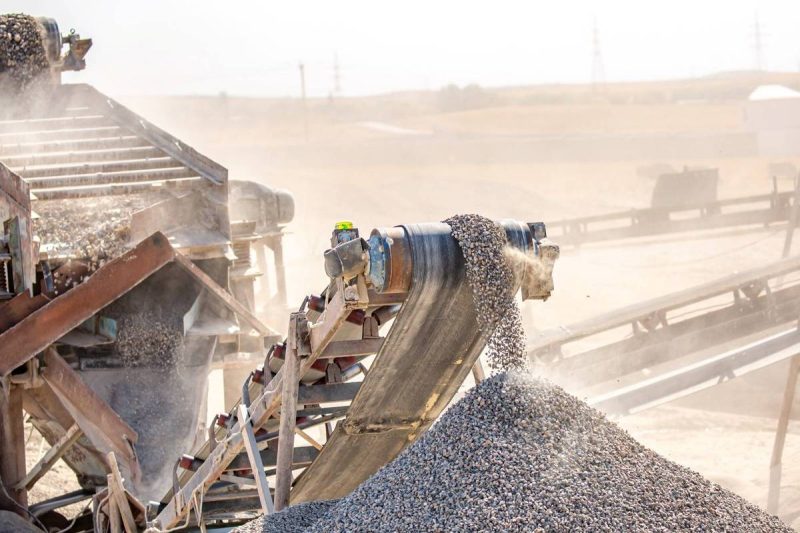
Tepponen outlined one persistent problem: oversized rocks and foreign objects making their way through processing plants.
“If an uncrushable rock or piece of metal gets into the crusher, it can cause blockages, damage belts and create significant downtime,” he said. “If it travels downstream, it can damage equipment and create critical bottlenecks.”
In Western Australia, BHP employs a hub-and-spoke model that connects five mines to a central processing facility. If one of the hazards disrupts operations at the facility, it can affect operations at the mines connected to it.
Additionally, fixing these issues exposes maintenance teams to higher-risk tasks, so eliminating the problem in the first place improves both productivity and safety.
Tepponen explained that historically, workers would be used to identify the hazards before they were loaded onto the truck, but once they reached the conveyor, they became much harder to remove.
The company now employs a real-time monitoring system that detects objects, alerts controllers and can automatically stop the conveyor.
“These are actually very simple technologies available commercially off the shelf. Cameras and machine learning control systems applied to a real world operational constraint,” he said.
In the prior three years, these incidents had caused over 1,000 hours of downtime, according to Tepponen. However, since it installed the monitoring system, the company hasn’t experienced any major disruptions or destruction events caused by oversized rocks, a change that he said amounts to hundreds of thousands of metric tons per year of increased processing.
“It’s a small system-level optimization that can deliver outsized returns on the AI journey. This is not a massive program. This is identifying simple constraints, applying proven technology,” he said, and emphasized the process of controlled testing, iteration and then deploying at scale. ‘That’s how systematic innovation actually happens.’
Testing scenarios with digital twin simulations
In his third use case example, he turned to BHP’s semi-autogenous grinding (SAG) mill at its Escondida operation in Chile, at which differing particle size and hardness in ore feed was impacting production.
The company used AI to create a digital twin of the value chain, which included everything that was known about the operation, such as ore body knowledge, processing behavior and operational constraints.
“That digital simulation enabled scenario testing and gave us the ability to inform blasting and blending strategies to predict granularity,” Tepponen said, noting that monthly production losses attributed to the problem fell by around 70 percent.
“The lesson, when the ore body knowledge is connected directly to the processing decisions, the system becomes more stable and predictable.”
BHP has since applied the approach to other operations, including ones in Australia and Chile.
“The Gen AI integration is multicultural, so non-technical users and the technical users can run scenarios in their first language,” he said, an aspect that he said is very important for the local companies at its operations.
Building foundations, collaboration key to AI usefulness
Tepponen was emphatic that AI alone wasn’t a “superhero.” BHP needed to specifically design these AI platforms in order to achieve these results.
“One of the most important lessons we have learned is we don’t actually get value from AI by starting with AI. The value comes from the foundations, consistent data standards, interoperability. You need to start at the bottom and make your way to the top.”
Tepponen also stressed the value of collaboration, noting that companies tend to be protective of their intellectual property, but opportunities are being missed that could be mutually beneficial.
“The hard truth is, no company can solve this problem of data fragmentation and system integration,” he said, and the industry would benefit from a collaborative approach on standards, interoperability and data throughout the value chain.
Securities Disclosure: I, Dean Belder, hold no direct investment interest in any company mentioned in this article.